Turn Your Clutter into Cash: A Financial Planner’s Guide to Monetizing Idle Assets
Stop treating your home like a storage unit. Registered Financial Planner David Isaiah Angway shares how to transform unused items into seed capital through a strategic decluttering approach.
FINANCIAL LITERACY
David Isaiah Angway RFP
7/15/20262 min read

Transcript Timestamps
00:00 – Introduction to decluttering as a new source of income.
01:55 – Defining "cluttered items" as idle assets or non-performing assets.
03:22 – The psychological and financial impact of consumerism.
04:50 – Strategy: Listing items with their fair market value (ROI mindset).
07:22 – Importance of setting deadlines for disposing of items.
09:40 – The multi-billion dollar market for pre-loved items.
11:58 – Addressing emotional attachment to possessions.
14:15 – Financial warning: Cost-per-usage calculation before buying.
17:35 – Pro-tips: Researching market value and aesthetic presentation.
19:40 – Moving from "spending" to "investing" your proceeds.
21:10 – Leveraging platforms and live selling for efficiency.
23:45 – Risk management and avoiding scams in buy-and-sell.
25:25 – Identifying common items to declutter (electronics, books, gear).
27:40 – Closing advice: The "One-In, One-Out" rule.
Turn Your Clutter into Cash: A Wealth-Building Strategy
Is your home a living space, or has it become an expensive storage room? Many households are filled with "idle assets"—items collecting dust instead of generating value. As a Registered Financial Planner, I often see how physical clutter translates into mental stress and financial stagnation. It is time to shift your perspective and turn your pre-loved goods into a source of income.
What Are "Idle Assets"?
In financial terms, any item you haven’t used for a significant period—be it old appliances, electronics, or clothes—is a non-performing asset. Instead of letting them sit in a closet, these items should be working for you.
The Wealthy Client’s Approach to Decluttering
Successful wealth management requires an efficient use of resources. Here is the framework I teach my clients:
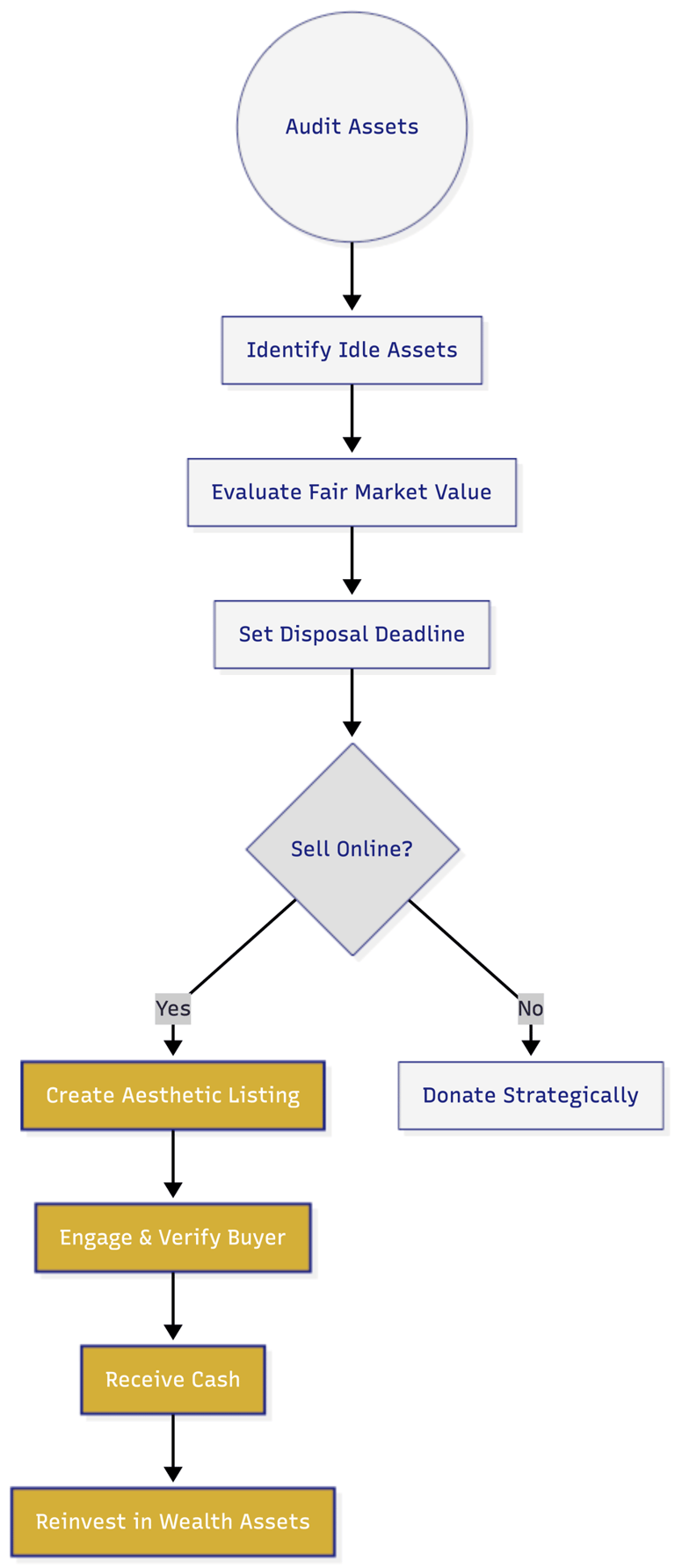
The Audit: List every unused item in your home and determine its current fair market value.
ROI Mindset: Stop thinking of decluttering as "giving away" things. Think of it as liquidating capital. If you sell a collection of books for 110,000 pesos, that isn’t just pocket money—it is seed capital for your next business venture.
Set a Deadline: Projects without deadlines are never finished. Set a firm goal to dispose of specific items within a 12-month window.
The "One-In, One-Out" Rule: To stop the cycle of consumerism, adopt a hard rule: before you bring a new item into your home, one item must go out.
Common Mistakes to Avoid
Emotional Attachment: We often hold onto items because of memories. Ask yourself: "Does this item still serve me, or is it better utilized by someone else?"
Neglecting Cost-per-Usage: Before buying a new luxury item, divide its cost by the number of times you will actually use it. If the cost-per-usage is high, it is a bad investment.
Lack of Credibility: When selling online, speed and communication are key. Build your reputation through consistent, professional engagement to ensure you get the best price.
Final Reminder: Spend wisely, Invest!
The most important part of this process is what you do with the proceeds. Avoid the trap of "spending" your newfound cash. Treat the money generated from your decluttering as investment capital. Whether it’s starting a new business or boosting your savings, ensure your assets move toward a future that builds wealth.
Key Takeaways
Identify Idle Assets: View unused items as capital, not just "stuff".
Calculate ROI: Always determine the fair market value of items before disposing of them.
Avoid Emotional Hoarding: Use the "One-In, One-Out" rule to maintain a clutter-free, productive environment.
Reinvest, Don't Splurge: Use proceeds from sales to fund investments or business ventures, not personal consumption.
Mitigate Risk: Use 3rd party collectors or secure payment methods when engaging in online buy-and-sell to avoid scams.
Are you ready to audit your assets and start your journey toward better financial health? Let me know which items you’re planning to declutter first!
© 2026 David Angway