How to Check Your VUL Fund Performance: YOY vs YTD
Learn how to check VUL fund performance using the right time frame. This guide explains the difference between YOY and YTD, provides a simple NAVPU example, and offers a clear checklist to follow before you switch VUL funds or rebalance your portfolio.
INSURANCE PLANNING
David Isaiah Angway RFP
1/8/20263 min read


Disclaimer: For educational purposes only. VUL fund values can go up or down. Past performance does not guarantee future results.
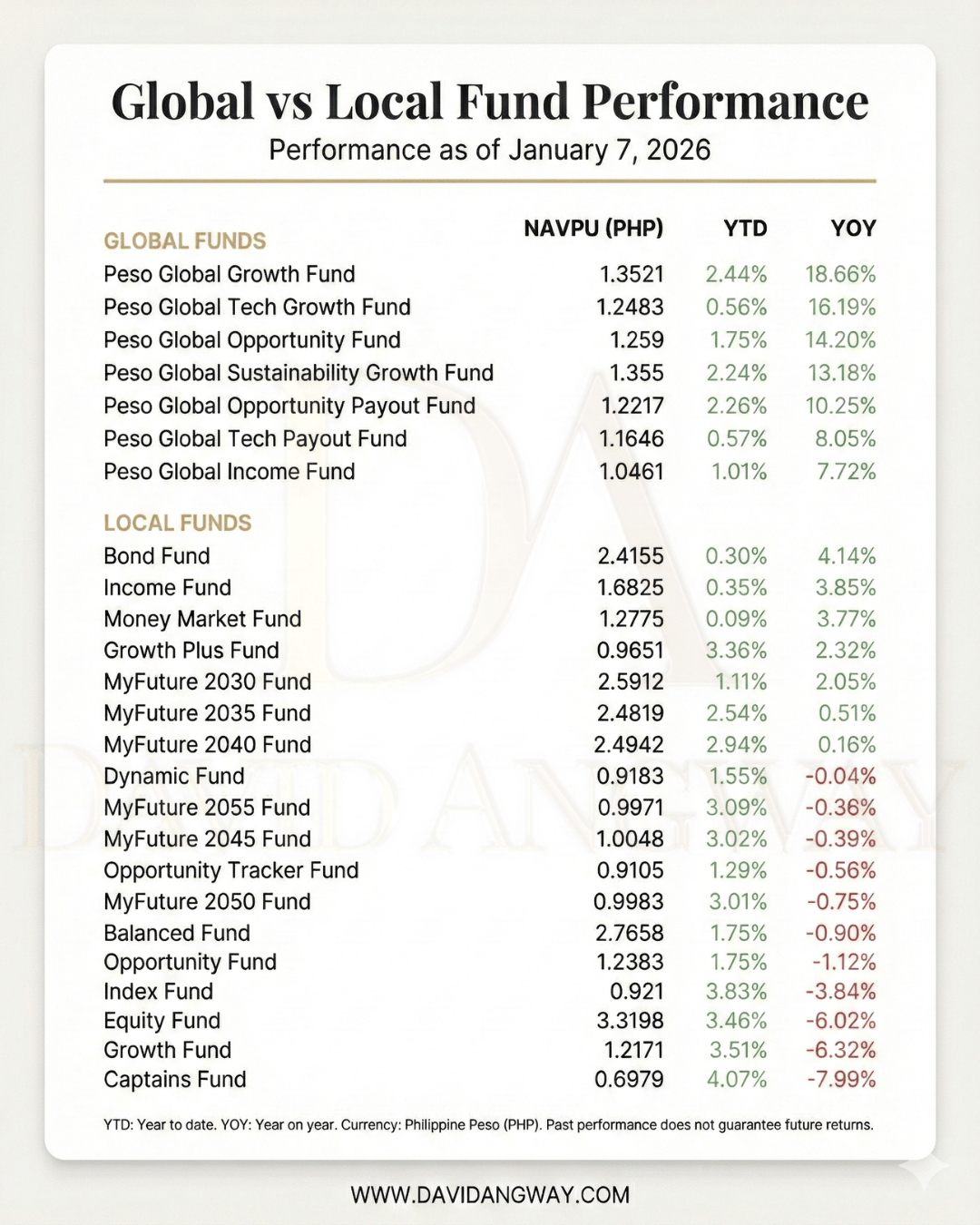
If you are checking your VUL fund this January, YTD can look exciting or scary, even when nothing “big” is happening.
This post shows a safer way to read your fund performance, so you do not rush into a switch. 
TABLE OF CONTENTS 
1. What YOY and YTD mean
2) Why January YTD is misleading
3) Why YOY is a better score in January
4) Simple NAVPU example
5) What to do in January
TL;DR BOX (quick summary) 
In January, YTD covers only a few days, so it can swing a lot.
Start with YOY for a fair view, then look at 3-year or 5-year numbers if available, and treat January YTD only as a brief update, not as a cue to act. 
Why January YTD is misleading
YTD means “year to date,” so it starts on January 1. 
In early January, there are only a handful of trading days. 
Here are the key problems:
1. January YTD is too short
When the time window is only a few days, the number is mostly short-term movement, not real performance. 
2. Small NAVPU changes look bigger than they are
Because YTD resets at Jan 1, even a small NAVPU move can look “big” on screen. 
3. Short periods have a lot of random movement
Markets move daily. In a short window, prices can jump for reasons that do not matter long term. 
Mini takeaway
If you judge your fund using January YTD alone, you are judging a very small slice of time.
3) Why YOY is a better score in January
YOY means “year over year.” It compares today’s NAVPU to the NAVPU one year ago. 
That longer window helps you see the real story.
4. YOY gives a full year of data
A full year includes good months and bad months, so it is a fairer check. 
5. YOY shows if the fund really recovered
A fund can be up this January, but still be down versus last year. YOY shows if you truly recovered.

6. January “top funds” can change fast
If you rank funds by January YTD, you are often ranking those that moved up in the first week. Next week can flip it. 
7. VUL is usually for long-term goals
Most VUL plans are held for years, so longer checks like YOY fit better than weekly moves.

8. Fees are clearer over a longer time
Over a few days, fees are easy to miss. Over a year, you see the net result more clearly. 
9. Global funds can move because of the peso
If your fund invests abroad, currency moves can affect results. A 12-month view gives better context. 
10. YOY helps you avoid emotional switching
January YTD can push you to switch too early or chase a “winner.” YOY helps you stay calm and follow a plan. 
Client note
YOY does not predict the future. It simply gives a more stable score than January YTD.
Simple NAVPU example (why January YTD can fool you)
Jan 1 NAVPU: 1.0000
Jan 7 NAVPU: 1.0200 
YTD = (1.0200 / 1.0000) - 1 = 2.00% 
Looks strong, but it happened in just a few days, so it can reverse quickly. 
Now compare one year:
Jan 7 last year NAVPU: 1.1500
Jan 7 this year NAVPU: 1.0200 
YOY = (1.0200 / 1.1500) - 1 = -11.30% 
Key takeaway
A “good” January can still mean you are down over the last 12 months. 
What to do in January (simple order)
Use this order when checking performance: 
1. Check YOY first.
2. If available, check the 3-year or 5-year next.
3. Look at YTD last, treat it as a short update, not a switch signal. 
Switch funds only if your goal or risk level changed, not because of one week of January numbers.
Book your one-on-one wealth management session with David now.
Schedule today to review your goals, time horizon, and VUL funds. Get a simple yearly check routine set. Book through your link here.
AI Disclosure: Portions of this content were generated or assisted by artificial intelligence. While AI helped produce the draft, the final thoughts and accuracy have been reviewed and verified by the author. Check the Trust and Standards for more info about terms and conditions
© 2026 David Angway